Key takeaways
- Home records save real money: warranty claims, insurance proof, resale value, and tax records on improvements.
- You only need three categories to start: warranties, receipts, and manuals — plus a photo inventory of valuables.
- Digital beats the drawer — searchable, backed up, and with you when you're standing in the store or on the phone with a claims rep.
- The part that fails is follow-through — knowing when a warranty expires before it's too late.
- The goal isn't a perfect filing system. It's being able to find the right document in ten seconds.
There's a drawer (or a shoebox, or a vague pile) in almost every home: appliance manuals, warranty cards, repair receipts, the paperwork from when you replaced the roof. It all gets saved. None of it can be found when you actually need it — which is always at the worst moment, like when the dishwasher dies the month before its warranty runs out.
Organizing your home's records is the least glamorous part of homeownership and one of the most quietly valuable. Done once, kept simple, it pays you back every time something breaks, floods, or sells. Here's how to set it up without turning it into a weekend project.
Why organizing home records matters
It's easy to treat paperwork as clutter. But each piece is leverage you'll want later:
- Warranty claims. Manufacturers ask for proof of purchase and the model/serial number. No receipt, no claim — you eat the cost of a repair the maker should have covered.
- Insurance. After a theft, fire, or water damage, your insurer wants proof of what you owned and what it was worth. A photo inventory and receipts turn a stressful claim into a paid one.
- Resale. Buyers (and appraisers) value a documented home. "Roof replaced 2024, here's the warranty" is worth more than "the roof is newish, I think."
- Taxes. Receipts for capital improvements can reduce the taxable gain when you sell. That shoebox can be worth thousands at closing.
- Sanity. Knowing where everything is means one less open loop in your head.
What to keep (and what to toss)
Keep:
- Warranties for appliances, the roof, HVAC, water heater, windows, and any major install — with the expiration date and what's covered.
- Receipts for appliances, repairs, and home improvements (anything that adds value or you might claim).
- Manuals for appliances and systems (most are also findable online by model number — so the model number is the real thing to capture).
- A photo inventory of valuables for insurance — serial numbers, condition, and a rough value.
- Service records — when the HVAC was last serviced, when the water heater was flushed. If you're just setting up a maintenance routine, our new homeowner maintenance checklist is a good place to start your service log.
Toss (or don't bother saving): packaging, generic flyers, expired warranties for things you no longer own, duplicate paper copies once they're scanned.
A simple system (three steps)
1. Go digital. Paper degrades, gets lost, and isn't with you when you need it. Snap a photo or scan of each document. The moment you can search your records — by appliance, by date, by store — the drawer becomes useful for the first time.
2. Capture the four things that matter for each item: what it is, the model/serial number, the purchase date, and the warranty expiration. That's enough to file almost any claim.
3. Set a reminder for the expiration. This is the step everyone skips and the one that actually saves money. A warranty you can't act on before it lapses is just a PDF. Put the expiration somewhere that will tell you before it's too late — the same way a good seasonal maintenance routine reminds you what to do before each season instead of after.
How to actually keep up with all of this
A folder of scans is a great start — but it's still on you to remember which warranty expires when, to log the new water-heater service, and to keep it all in one place you'll check.
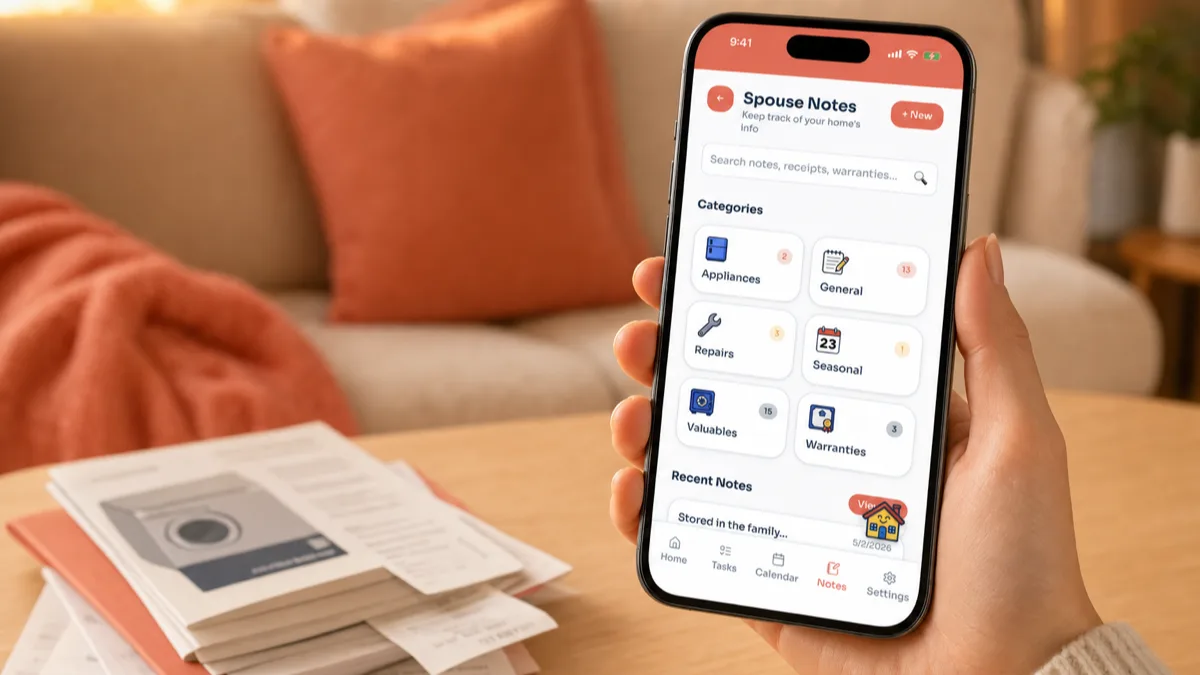
That's a big reason we built HouseSpouse. It keeps your home's records together: scan a receipt and it pulls out the vendor, amount, and date for you; store warranties with their expiration dates and get a heads-up before they lapse; keep a photo inventory of valuables for insurance; and jot notes and service history alongside your maintenance plan. You can even ask the built-in AI advisor about a manual or a model number — photos welcome. Everything searchable, in one place, with you wherever you are.
Put your home's paperwork on autopilot, so the next time something breaks, the proof you need is already in your pocket.
Frequently asked questions

Written by
HouseSpouse Team
HouseSpouse is built by a team led by real-estate professionals who've helped homeowners care for and sell their homes. We write practical, judgment-free guides to make home maintenance feel manageable — no matter how handy you are.
Put this checklist on autopilot
HouseSpouse builds a personalized seasonal plan for your home, reminds you at the right time, and answers any maintenance question — 24/7. Start your 7-day free trial.